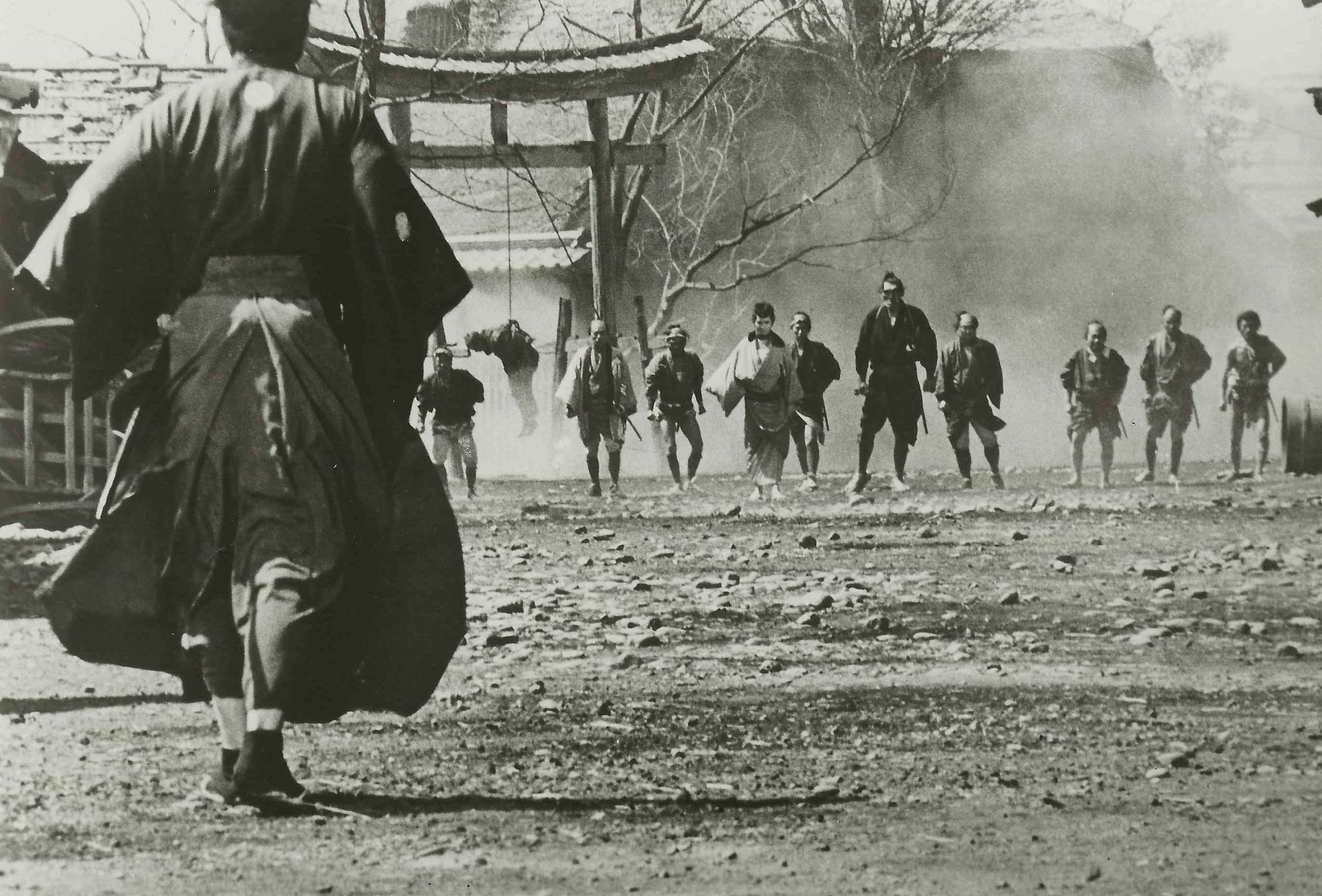
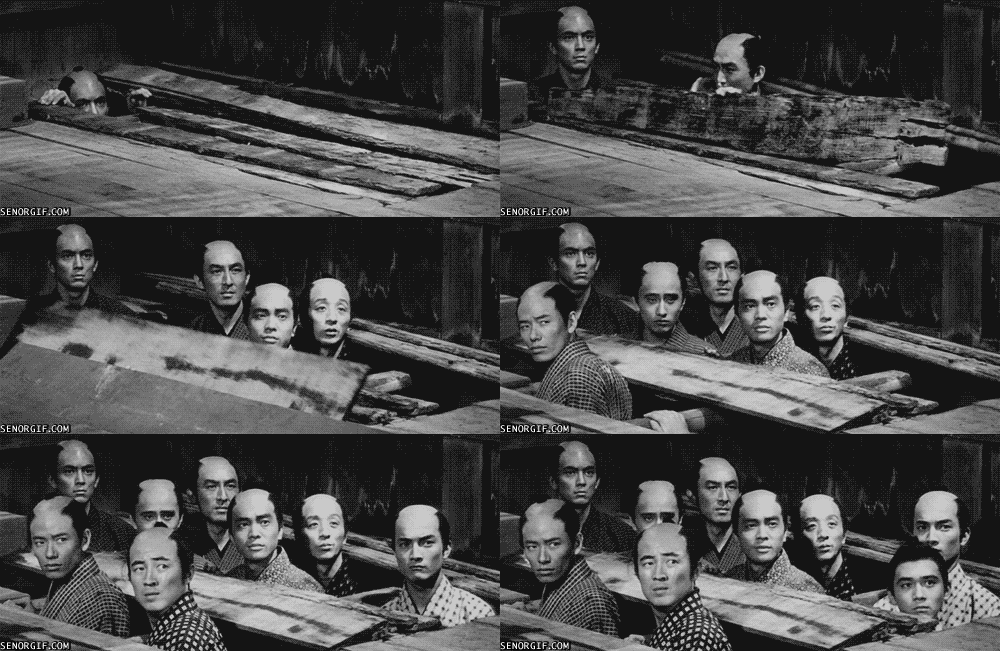
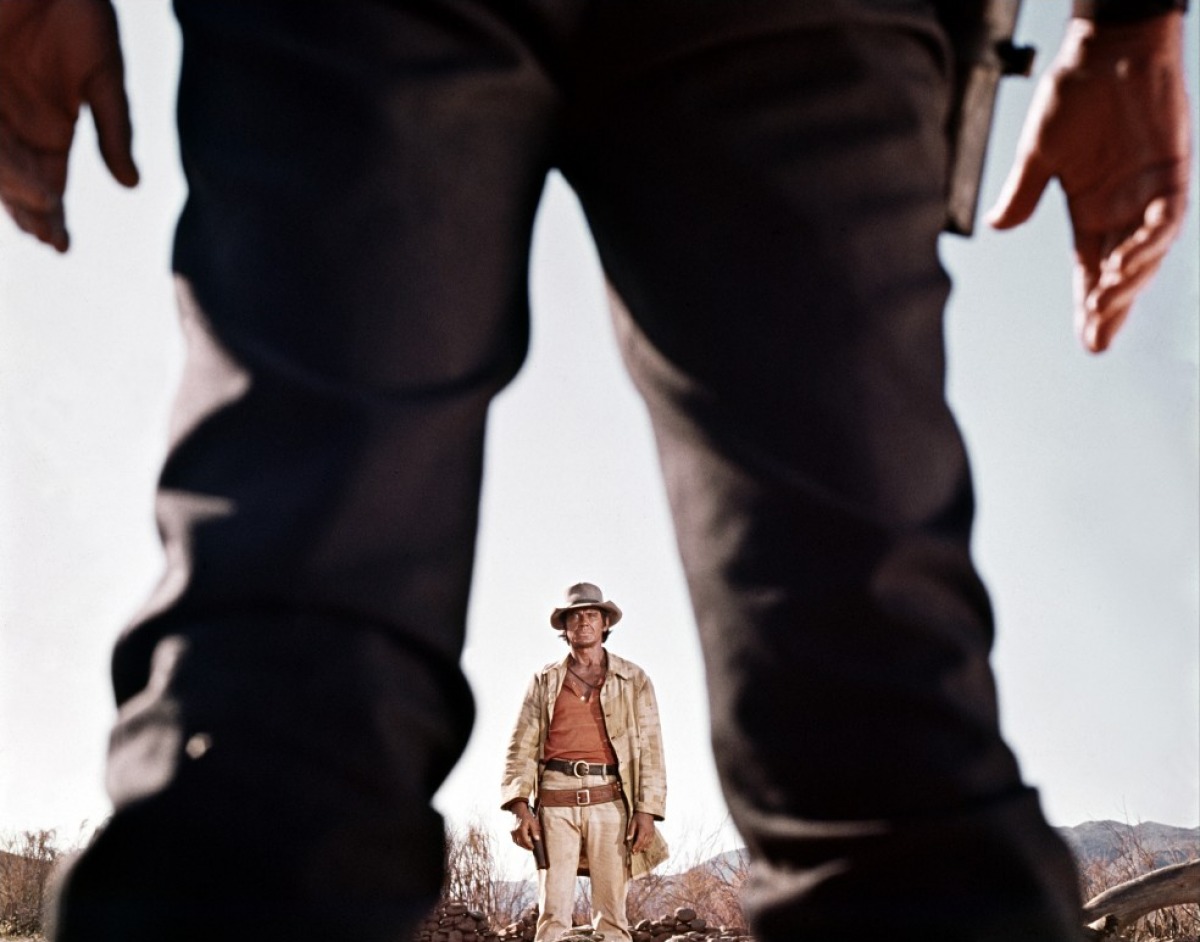
Twelve years later, in 1958, he would release an updated version of that tale, titled in english The Hidden Fortress. Kurosawa had come off of a streak of serious, dark films and felt the need to do something very different, and the result is the perhaps most light-hearted film of his oeuvre. An action-filled adventure of a princess, her loyal general and their entourage attempting to pass through enemy lines to safety with the last of the royal gold in tow. Along the way they run into two bickering peasants who have been unfortunate enough to become involved with the ongoing civil war around them. Aside from Flash Gordon, Kurosawa’s The Hidden Fortress is the perhaps most oft quoted inspiration behind Star Wars, a comparison which is both warranted, yet often overplayed. While the final film retains several key elements, in particular the two bickering peasants, there is much that it leaves out or changes to the point where it can’t even be convincingly argued to still be similar. For the full impact of The Hidden Fortress on Star Wars, we must go back to the earliest drafts of the screenplay.
“Hidden Fortress was an influence on Star Wars right from the very beginning,” Lucas says. “I was searching around for a story. I had some scenes–the cantina scene and the space battle scene–but I couldn’t think of a basic plot. Originally, the film was a good concept in search of a story. And then I thought of Hidden Fortress, which I’d seen again in 1972 or ’73, and so the first plots were very much like it.”[p9, 2]makingstarwars
Having thrown around some of his initial ideas in the obtuse two-part Journal of the Whills plot synopsis to little success, Lucas turned turned to The Hidden Fortress, and, according to Michael Kaminski’s The Secret History of Star Wars, “relied on a plot summary of Kurosawa’s film, copying entire passages from Hidden Fortress‘ synopsis in Donald Richie’s authoritative book The Films of Akira Kurosawa, first published in 1965”.[kl1207, 3]kaminski In fact, the eagle-eyed viewer can spot the mis-remembered title of the book on one of Ralph McQuarrie’s drawings from the time on the blu-ray extras. The opening of the treatment reveals just how close it was the Kurosawa’s film:
It is the thirty-third century, a period of civil wars in the galaxy. A rebel princess, with her family, her retainers, and the clan treasure, is being pursued. If they can cross territory controlled by the Empire and reach a friendly planet, they will be saved. The Sovereign knows this, and posts a reward for the capture of the princess.
She is being guarded by one of her generals, (Luke Skywalker) and it is he who leads her on the long and dangerous journey that follows. They take along with them two hundred pounds of the greatly treasured “aura spice”, and also two Imperial bureaucrats, whom the general has captured.
Most of the treatment follows The Hidden Fortress beat for beat, though in the final act it deviates quite drastically into the aforementioned space battle, not dissimilar from the one that ended up closing the final film. But while Lucas did for a short period consider buying the rights for Kurosawa’s film[p158, 4]baxter, a move that would have been wise, considering what happened when Leone decided that he liked the story of Yojimbo, he eventually decided against it, continuing instead to rework his treatment into something different. The subsequent screenplays all differ from one another, often quite drastically. But nevertheless, significant elements from The Hidden Fortress did make it all the way through the revisions, and into the final film. Although, like so many comparisons brought up in relation to Star Wars, most of which have been purposefully left out of this book for lack of convincing evidence, some claims of Hidden Fortress’s influence should be taken with a grain of salt, and anyone claiming that ‘Star Wars is just Hidden Fortress in space’, placed under immediate citizen’s arrest.
That said there are certainly a few worth delving into, most notably the bumbling, bickering peasants of Matashichi and Tahei. Stumbling into the first frames of Hidden Fortress, arguing bitterly over who is to fault for their current predicament. Not soon after, they split up, yelling insults at each other, heading in opposite directions, mirroring quite closely the introduction of R2-D2 and C–3PO as the first characters on screen in Star Wars. They even share the same roles as Matashichi and Tahei, as both comic relief as well as functioning as the backbone of sorts to the story. Matashichi and Tahei however remain largely pathetic and egotistical throughout most of the film, where the droids, despite 3PO’s theatricality, are as heroic as the rest of the rebels.